Horror and Me:
There has always been a strange feeling that humanity seems to have when it comes to watching scary movies, you don’t want to watch and yet you can’t seem to look away. The same can be said when reading horror fiction. The many times people have told me ‘it’s just a book’ when I’ve been too afraid to read another chapter, for fear of having nightmares.
I remember the very first horror novel I read; The Shining [1] remains to this day my favorite horror novel. I first discovered Stephen King after reading his serial novel The Green Mile [2] and decided to have a look at his other works. Little did I know what I let myself in for. It’s amazing the first time you read a great book, you remember exactly where you were, sitting on my bed at home with a reading light on, huddled in blankets, risking a look over the top of the book every now and then to check for ghosts.
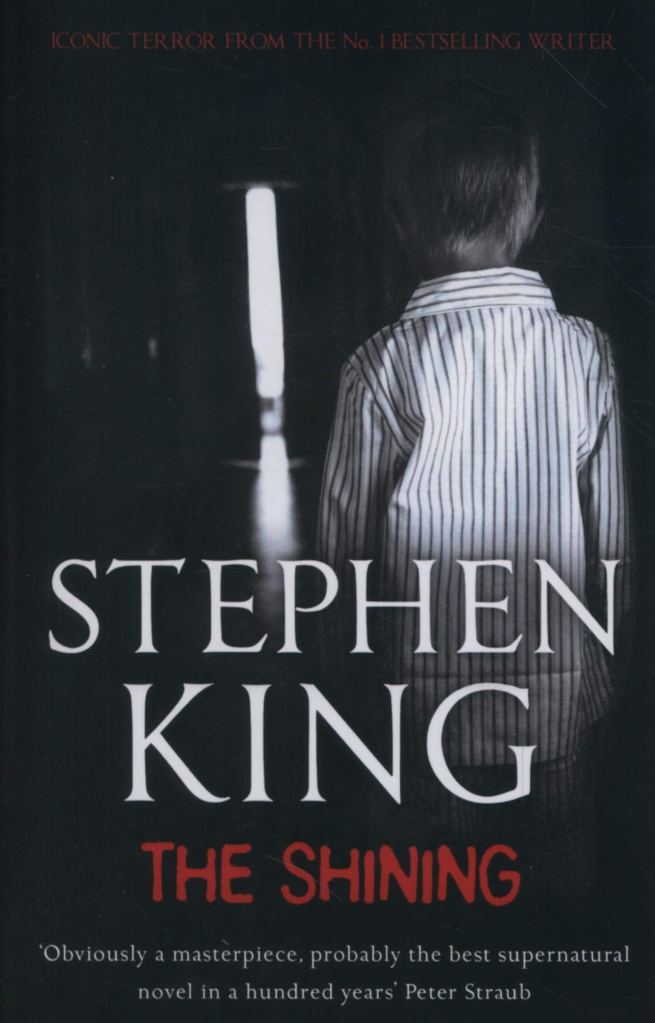
Photo by Pedro Figueras on Pexels.com
It amazes me how he can make the most menial of household objects turn into the most terrifying things I have ever read. Danny’s encounter with the firehose in the hallway almost made me put the whole book in the freezer. He turns our own fear of the unknown against us, the hose is described as a snake and so a rational fear of being bitten and poisoned is turned into an irrational fear of hosepipes, clever. Like the short story “The Family Car” [3] by Brady Golden; the protagonist is stalked by the car that her parents went ‘missing’ in, a seemingly normal vehicle that should fill her with hope to see her parents again, but instead fills her with terror. The fear of the unknown is played with in the story, the paranoia that you are being followed by something uncanny, “she thought someone was following her. Said she was hearing noises outside at night” [3], leading her to be terrified of her own family’s car.

One of the earliest films that truly left me psychologically scared after finishing it was The Sixth Sense [4], the empathy I felt with Haley Joel Osmet’s character for having to endure the paranormal as a child was very strong. I went to bed feeling extremely uneasy that something was gonna grab my leg from under my bed.
As Lents states “fear is one of our most basic emotions”[5], which is why hollywood and the majority of the film industry release horror films every year, to entice us into the theatre’s because of our basic biological response to fear. There is always some horror film released around Valentine’s Day too, to encourage couples to go on dates, “since the feeling of fear can easily overlap or be confused feeling attracted to someone or even falling in love” [6]. Many of the physical feelings of fear coincide with feelings of arousal; increased heart rate, dilated pupils, what Professor Javid Sadr describes this as “a kind of confusable arousal”[6]. Most likely it’s so your partner can do the classic yawn and arm around shoulders move, leading onto the classic ‘hold me I’m scared’ line in order to get physically close to your date. So if you want to use this to your advantage I’d suggest putting on a mild horror film, because who wants to cuddle while watching Saw [7].
Sources:
[1]: King, Stephen. The Shining. United States: Doubleday, 1977.
[2]: King, Stephen. The Green Mile. United States: Signet Books, 1996.
[3]:Morris, Mark, ed. “The Family Car by Brady Golden” in New Fears. London: Titan Books, 2017.
[4]: The Sixth Sense. Directed by M. Night Shyamalan. Buena Vista Pictures Distribution, 1999. Feature Film.
[5]: Lents, Nathan H. Not So Different: Finding Human Nature in Animals. Columbia University Press, 2016. Accessed February 6, 2020. http://www.jstor.org/stable/10.7312/lent17832.
[6]: Logan, Megan. Science Says You Should Take Your Dates To Horror Movies. Inverse, 10.12 2016. Accessed February 1, 2020. https://www.inverse.com/article/22818-date-horror-movies-science-misattribution-of-arousal
[7]: Saw. Directed by James Wan. Lions Gates Films, 2004. Feature Film.
Horror and the Writer:
Have you ever finished reading a horror novel and then preceded to sit down and think about how unhinged the writer must have been to create a story like this? Well, you’re not alone. After I finished reading The Shining [1] for the first time, I wondered the same thing. As it turns out Stephen King is a normal guy who happens to love both horror and writing. In his non-fiction book entitled On Writing: A Memoir of the Craft [2] he explains what it takes to make it in the written world, “if you want to be a writer, you must do two things above all others: read a lot and write a lot. There’s no way around these two things that I’m aware of, no shortcut” [3]. He demonstrates that the things we read and see day to day are going to influence and inspire us to write stories of our own.
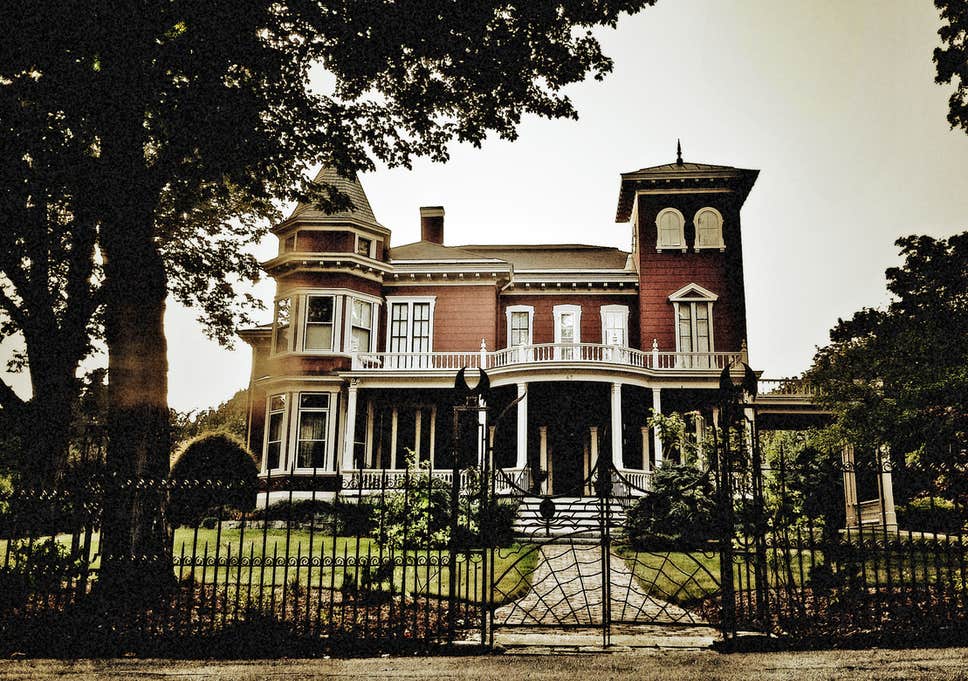
Being one of the world’s leading horror writers, he has also published a book commenting on the essentials needed to make a good horror novel. Danse Macabre [4], translated in English to mean ‘the dance of death’, explains how horror movies and fiction to the everyday consumer is like “a safety valve”[5] that we need in order alleviate the pressures of mundane life. King also claims that when it comes to horror “humans deal better with symbols – the cross equals Christianity, the swastika equals Nazism”,[6] this can be demonstrated by films like The Exorsist [7] in which a child possessed by a demon desecrates a cross by violently masturbating. This iconic shot of an innocent child’s hand holding a bloody cross is one of the most powerful religious symbols in horror film history. Symbols like these in horror texts not only make the reader uncomfortable, but the juxtaposition of symbols normally associated with good, rather than evil, being used for horror creates a apprehensive feeling in the reader as their mind takes over.

King takes symbols we know and turns them into something we fear. Clowns for me were always associated with children’s parties until I read IT [8] which has given me a fear of them ever since. The same can be said with Kathryn Ptacek’s short story “Dollies” [9] which is full of symbolism. The use of the dolls instantly makes the reader agitated. Empathy for the protagonist’s clear disliking of the human-like dolls creates a tense atmosphere throughout the whole story. A children’s toy something associated with fun and play is now being associated with disease when “small-pox” and “blue dots”[10] appear on the dolls skin, playing on the human inbuilt fear of death.
Edgar Allen Poe derived a formula for the perfect horror novel, “the isolation of the reader, the stunning of his sensibilities, the victimisation of his emotions, the premature burial of his reason” [11]. With these key traits in a horror novel you leave the reader truly frightened about what they have just read, like in Stephen Gallagher’s “Shepherd’s Business” [12]. The isolated location of the island and untrusting townsfolk sets an eerie note from the beginning of the story. Even by the end of the story I completely believed that something like this could happen and be treated as normal on an island shut away from the new morals of an industrial world. He uses the “stunning of his sensibilities” [13] to exploit “the reader’s “willing suspension of disbelief” to the point of confusion by presenting him with…incredible information in an almost convincing manner”. [14] The wife’s shock at seeing her dead baby’s skin wrapped around another child is not explicitly described by is left to the reader’s imagination. As Visagie states “Our minds are extremely powerful. They are able to imagine an abundance of complex images” [15], as normally the best rated horror films are those in which you hardly ever actually see the creature, take Alien [16] and Jaws [17]. A truly horrific example of how even scriptwriters leave our imagination to run wild is in The Conjuring in which a girl describes what she can see to her sister without the monster being shown.
Sources:
[1]: King, Stephen. The Shining. United States: Doubleday, 1977.
[2]: King, Stephen. On Writing: A Memoir of the Craft. London: Pocket Books, 2002.
[3]: King, Stephen. On Writing: A Memoir of the Craft. London: Pocket Books, 2002.
[4]: King Stephen. Danse Macabre. United States: Gallery Books, 2010.
[5]: King Stephen. Danse Macabre. United States: Gallery Books, 2010.
[6]: King Stephen. Danse Macabre. United States: Gallery Books, 2010.
[7]: The Exorcist. Directed by William Friedkin. Warner Bros. Pictures, 1973. Feature Film.
[8]: King, Stephen. IT. United States: Viking, 1986.
[9]: Morris, Mark, ed. “Dollies by Kathryn Ptacek” in New Fears. London: Titan Books, 2017.
[10]: Morris, Mark, ed. “Dollies by Kathryn Ptacek” in New Fears. London: Titan Books, 2017.
[11]: Saliba, David R. A Psychology of Fear. Washington D.C: University Press of America, 1980.
[12]: Morris, Mark, ed. “Shepard’s Business by Stephen Gallagher” in New Fears. London: Titan Books, 2017.
[13]: Saliba, David R. A Psychology of Fear. Washington D.C: University Press of America, 1980.
[14]: Saliba, David R. A Psychology of Fear. Washington D.C: University Press of America, 1980.
[15]: Visagie, “Fear of the Unknown”: https://thecinemacult.com/2018/10/18/fear-unknown-horror-uses-imagination-scare-us/
[16]: Alien. Directed by Ridley Scott. 20th Century Fox, 1979. Feature Film.
[17]: Jaws. Directed by Steven Spielberg. Universal Pictures, 1975. Feature Film.
[18]: The Conjuring. Directed by James Wan. Warner Bros. Pictures, 2013. Feature Film.
Horror and Location:
A good location in the horror genre is one of the most important steps to writing a great scary story. If you’ve ever walked alone through a creepy forest at night, then you’ll understand why location is the most important element to a novel. The shadows and creaking of the trees leaves an uncanny feeling; you expect to see some ghoulish creature lurking between the bushes. The psychological way a place can make us feel emotion, good or bad, is called ‘psychogeography’, a term defined as “the study of the precise laws and specific effects of the geographical environment, consciously organized or not, on the emotions and behavior of individuals”. [1] The location managers for films use this psychogeography when deciding on where to shoot the perfect horror. Stephen Crossley who worked on production like Fear the Walking Dead [2] and Paranormal Activity: The Marked Ones [3] explains how scouted locations, “You look for things that have a sense of isolation”, [4] “very often I pick things that are up on a hill, or some kind of rise, so you can look up at the property from a low angle. That gives things a spooky, foreboding quality”. [5] By doing this it creates a foreboding feeling in the audience before any killer or monster is even revealed on screen.
This fear of environment is linked to our primal instincts to survive, something which Charles Dickens called ‘Environmental Selection’. Dickens theory is that “species…simply don’t survive the elements long enough to reproduce and pass along their genes” [7], which Nicholson explains that we have learned through generations that uninhabited surroundings are usually dangerous. ‘Shepherd’s Business’ [8] by Stephen Gallagher plays on this theory, since humans by nature are social creatures, Gallagher puts the narrator in an isolated environment cut off from modern society.
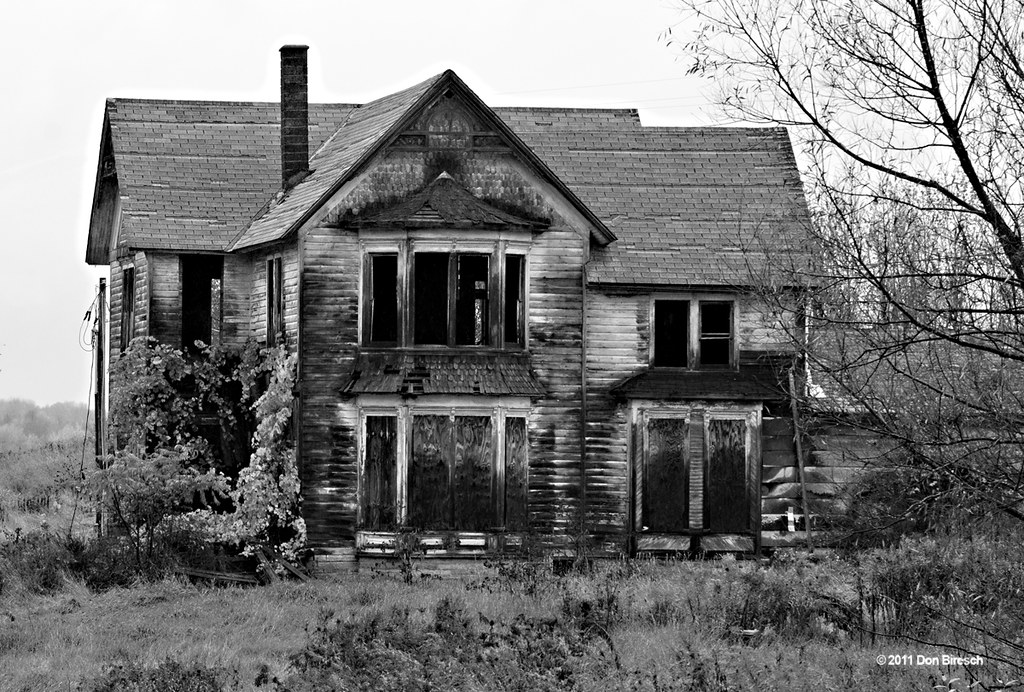
One of Edgar Allen Poe’s strategy’s to making a good horror story was “the isolation of the reader” [9], and the eerie island and untrusting townsfolk in ‘Shepherd’s Business’ follows this rule perfectly. If we look at other texts that follow this rule, Stephen King’s, The Shining [10] does this perfectly. A hotel full of staff and customers is suddenly left empty for the winter season, leaving hallways desolate and quiet. An abandoned hotel, house, hospital and cabin are usually the most common locations in horror fiction. Freud’s theory of the uncanny would support our unease for certain places, since they can bring up unpleasant memories from childhood, and “mark the return of the repressed”. [11] For example, ‘The Abduction Door’ [12] by Christopher Golden plays on this childhood fear, but also the isolation of the elevator in the hotel. Even the hallways that the narrator runs through behind the abduction door are isolated. They are full of parents, but these people are so withdrawn and deeply depressed by what they have done that they are empty.
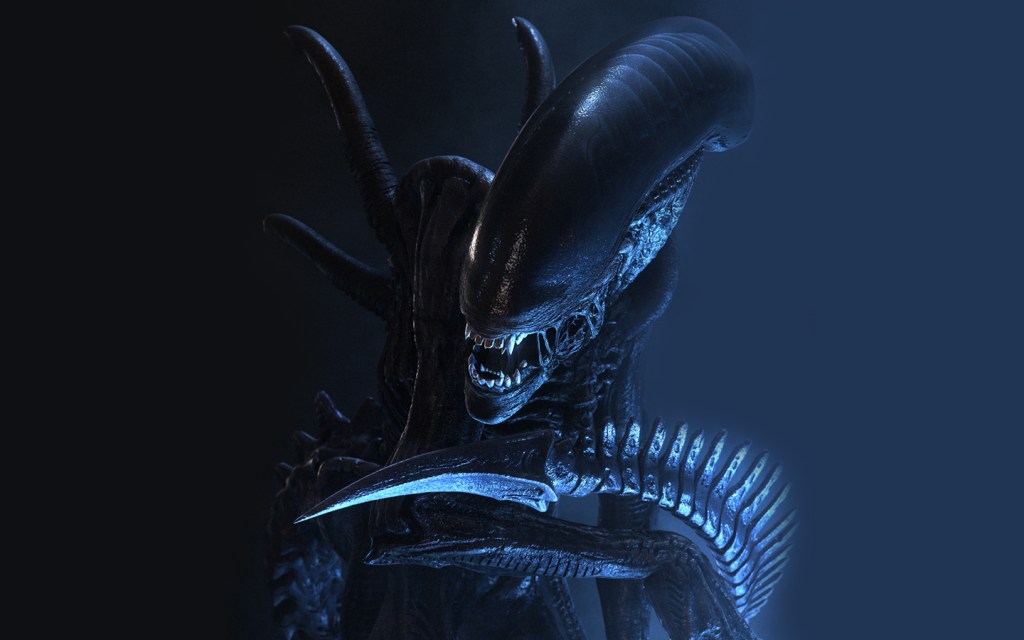
The location in horror fiction and film not only has to be scary in itself, but it also has to support the monster or killer that is going to inhabit that setting. ‘The Salter Collection’ [13] for example, is based in a museum setting that is not overused, the wax cylinder in the story can only be accessed by a small group of people. This creates a sense of tension in itself, when strange things start to happen, like the cylinder smashing on the floor, there can be no easily explainable answer to what happened. If it was located in a busy environment it could be blamed on a number of causes, it’s the mystery that creates the horror. Moreover, if you think about the setting of Aliens [14], the majority of the film is set on a spaceship in space. If you were to take the Xenomorph out of the confines of the dark and twisting rooms of the ‘Nostromo’ and put it in daylight in a supermarket it really wouldn’t have the same kind of fear response from the audience.
Sources:
[1]: G. Debord. Introduction to a Critique of Urban Geography, 1955. http://library.nothingness.org/articles/SI/en/display/2
[2]: Fear the Walking Dead. Directed by Robert Kirkman and Dave Erickson. AMC, 2015- 2019. TV Series.
[3]: Paranormal Activity: The Marked Ones. Directed by Christopher Landon. Paramount Pictures, 2014. Feature Film.
[4]: Marsh, Callum. ‘How Locations Can Help Build Terror In Movies’, Variety, 7 June 2017. Accessed 14 March 2020.
[5]: Marsh, Callum. ‘How Locations Can Help Build Terror In Movies’, Variety, 7 June 2017. Accessed 14 March 2020.
[6]: 28 Days Later. Directed by Danny Boyle. Fox Searchlight Pictures, 2002. Feature Film.
[7]: Terry, R.L, ‘The Psychology of Horror: An Exploration of Freud’s ‘Uncanny’ through “Psycho”’, Reel View, March 18 2018. https://rlterryreelview.com/2018/03/13/freudhorror/ Accessed 12 March 2020.
[8]: Morris, Mark, ed. “Shepard’s Business by Stephen Gallagher” in New Fears. London: Titan Books, 2017.
[9]: Saliba, David R. A Psychology of Fear. Washington D.C: University Press of America, 1980.
[10]: King, Stephen. The Shining. United States: Doubleday, 1977.
[11]: Nicholson, Nigel. ‘How Hardwired Is Human Behaviour?’, Harvard Business Review, 1998. Accessed 14 March 2020. https://hbr.org/1998/07/how-hardwired-is-human-behavior
[12]: Morris, Mark, ed. “Abduction Door by Christopher Golden” in New Fears. London: Titan Books, 2017.
[13]: Morris, Mark, ed. “The Salter Collection by Brian Lillie” in New Fears. London: Titan Books, 2017.
[14]: Alien. Directed by Ridley Scott. 20th Century Fox, 1979. Feature Film.
The Nature of Horror:
Well established within our basic biology’s and natural instincts is the feeling of fear. It is a feeling that is present in humans across the globe; fear is indistinguishable when it comes to gender, race or religion. “Even the earliest recorded tales have elements of horror, fear, and despair”, the Old Testament is one of these examples. [1] The Bible is not classified as a horror text and yet it is full of graphic violence and horrific stories, these tales are read to children to teach them humanity, and yet horror stereotypically uses religion as evil. We are taught to fear things that could cause us harm, so why do we seek out horror?
Søren Birkvad, of Inland Norway University of Applied Sciences states that, “horror films entertain us”; they “allow us to feel anxious in a safe environment”, creating a feeling of euphoria in the audience when the film has come to a conclusion and no harm has occurred to them. [2] “A victim of fear perceives a threat to his identity which he experiences as a loss of control”, compared to the reader of horror literature who has a choice to remove themselves from that fear by putting down the book they are reading. [3] This sense of ease when we watch or read horror in a controlled environment creates a fear response triggering our inbuilt fight or flight mechanism. This helps us to release the tension we have built up from our everyday lives when that response is ignored in stressful work situations.
Horror fiction is defined as:
“”a piece of fiction in prose of variable length… which shocks, or even frightens the reader, or perhaps induces a feeling of repulsion or loathing”. [4]
These fictions can include anything from supernatural entities to flesh eating zombies. “Psychologist Kjøs Johnsen also notes Sigmund Freud’s term “Das Unheimliche,” the uncanny, as a common theme for horror films” as well as fiction. [5] The key to writing a good horror story is that it must affect the reader in some emotional or psychological way, even if it is just empathy for the characters. The genre of horror affects everyone differently based on beliefs and experiences. The film Hush (2016) for example may be entertaining for some viewers, but for those who have experienced a home invasion it may be terrifying to watch. [6]
The same as reading a story like ‘The Family Car’ by Brady Golden, the way it stalks it’s victims to scare them first, “for the past couple of months, Denise was getting…I hate to use the word paranoid”, which would bring up unpleasant memories for anyone who has ever been followed home. [7] Although Gottshall states “scary films – not real world nightmares – were the source of [people’s] most traumatic memories.”[8] This could possibly be one of the reasons we obtain irrational fears from reading horror fiction, especially when we are children. Every horror novel plays on our inbuilt instincts to survive. One book that terrified me when I first read it was The Shining. [9] The way in which King made inanimate objects real, was disturbing. “it was stupid to think that it looked like some poisoned snake…that had heard him and woken up”: this was the sentence that gave me an irrational fear of anything shaped like a hose for weeks after I had read the passage. [10]
We are drawn to Horror in particular to feel that rush of adrenaline, the fear of the unknown keeping us glued to the pages even though it terrifies us. Horror is stereotypically chosen by couples for ‘date nights’. Usually this is to encourage physical closeness when experiencing fear. This later can be changed into a sexual response as fear and arousal create the same physical changes to the body. This is compared to reading horror fiction, which is usually done solo. Perhaps is this why the emotional effect on us from reading lasts longer than a horror movie because we were that much more invested in the novel and are experiencing this fear alone. “Alone. Yes, that’s the key word, the most awful word in the English tongue. Murder doesn’t hold a candle to it and hell is only a poor synonym.” [11] The simple for why we as a society love horror: it’s bloody good!
Sources:
[1]: Masters, K . A Brief History of Horror Literature [online]. BooksTellYouWhy.com, 2013. https://blog.bookstellyouwhy.com/-a-brief-history-of-horror-literature Accessed 15th April 2020.
[2]: Skarre, D. ‘Why do we like watching horror films?’ Science Norway. 5th Dec 2017. https://partner.sciencenorway.no/film-forskningno-inland/why-do-we-like-watching-horror-films/1451826 Accessed 05 April 2020.
[3]: Saliba, David R. A Psychology of Fear (Washington D.C: University Press of America, 1980) pp. 39
[4]: The ‘Introduction’ in The Penguin Book of Horror Stories. Penguin Books: New York, 1984.
[5]: Skarre, D. ‘Why do we like watching horror films?’ Science Norway. 5th Dec 2017. https://partner.sciencenorway.no/film-forskningno-inland/why-do-we-like-watching-horror-films/1451826 Accessed 05 April 2020.
[6]: Hush. Directed by Mike Flanagan. Netflix (Blumhouse Productions) , 2016. Feature Film.
[7]: Morris, Mark, ed. “The Family Car by Brady Golden” in New Fears. London: Titan Books, 2017, p85.
[8]: Gottschall, J (2013). The Storytelling Animal: How Stories Make Us Human. New York: Mariner Books. Pg.150.
[9]: King, Stephen. The Shining. United States: Doubleday, 1977.
[10]: King, Stephen. The Shining. United States: Doubleday, 1977, p189.
[11]: King, Stephen. Salem’s Lot (London: Hodder, 2006), p.289
 Horror Fiction